The Role of a Computer Technician
Computer Technicians play a vital role in ensuring the smooth operation of computer systems and networks. They are responsible for maintaining, troubleshooting, and repairing hardware, as well as providing technical support to employees and customers. Let’s explore the job description overview and key responsibilities of a Computer Technician.
Job Description Overview
The job of a Computer Technician involves installing, maintaining, and repairing computers and networks. They ensure that the IT infrastructure is in place and utilized effectively. Candidates for this role should be proficient in computer systems, network functions, possess problem-solving skills, and work accurately to resolve issues and maintain functionality. The primary goal of a Computer Technician is to install and maintain high-quality networks and computer systems, emphasizing the importance of efficient IT infrastructure within an organization.
Key Responsibilities
The duties and responsibilities of a Computer Technician typically include:
-
Hardware and Software Installation: Computer Technicians are responsible for setting up and installing computer hardware and software according to the needs of the organization. This includes configuring operating systems, drivers, and applications to ensure proper functionality.
-
Maintenance and Repair: Computer Technicians perform regular maintenance tasks to keep computer systems and networks running smoothly. They identify and troubleshoot hardware and software issues, diagnose problems, and apply appropriate solutions to ensure optimal performance.
-
Technical Support: Computer Technicians provide technical support to both employees and customers. They assist with computer-related problems, answer queries, and guide users through troubleshooting steps to resolve issues. Effective communication and customer service skills are essential in this aspect of the role.
-
Network Management: Computer Technicians may be involved in network management tasks, such as configuring routers, switches, and other networking equipment. They ensure that networks are secure, properly connected, and functioning efficiently.
-
Documentation and Reporting: Computer Technicians maintain accurate records of hardware and software inventory, repairs, and maintenance activities. They may also generate reports on system performance, issues, and resolutions for documentation and future reference.
-
Training and Education: Computer Technicians may conduct training sessions to educate employees on basic computer operations, software usage, and best practices for maintaining system security.
By fulfilling these key responsibilities, Computer Technicians contribute to the overall productivity and functionality of an organization’s computer systems and networks. They play a crucial role in resolving technical issues, ensuring smooth operations, and providing essential technical support.
For more information on the responsibilities and duties of a Computer Technician, refer to our article on computer technician responsibilities and computer technician job duties.
In the next section, we will explore the skills and qualifications required to excel in the role of a Computer Technician.
Skills and Qualifications
To excel in the role of a computer technician, individuals must possess a specific set of skills and qualifications. This section will explore three key areas: technical expertise, customer service skills, and certifications for advancement.
Technical Expertise
A computer technician must have a strong foundation of technical expertise to diagnose and resolve various computer issues. This includes:
-
Troubleshooting: The ability to identify and analyze computer problems, whether they are hardware or software-related. Computer technicians should be skilled in isolating issues and finding effective solutions.
-
Computer Systems: In-depth knowledge of different computer systems, including desktops, laptops, and servers. Understanding the components and architecture of these systems is essential for successful troubleshooting and repair.
-
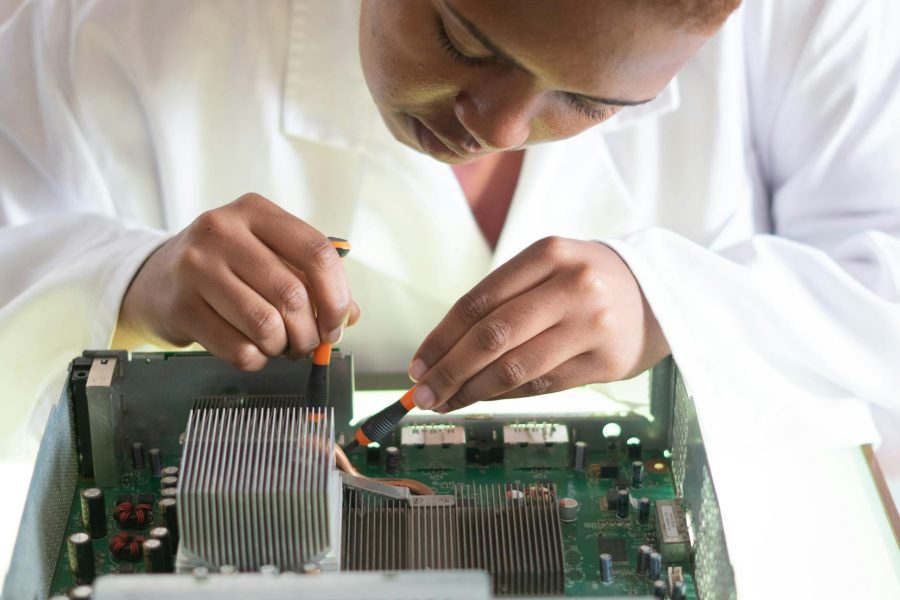
Hardware and Software: Proficiency in working with hardware components such as motherboards, processors, memory, and storage devices. Additionally, computer technicians should be familiar with different operating systems and software applications.
-
Networking: A solid understanding of networking concepts, including TCP/IP, routers, switches, and wireless networks. This knowledge enables technicians to diagnose and resolve network-related issues.
For a computer repair technician, additional technical skills may be required, such as expertise in laptop computers, printers, and other specialized devices.
Customer Service Skills
In addition to technical expertise, computer technicians must possess excellent customer service skills. Since they often interact directly with clients, strong communication and interpersonal skills are essential. These skills include:
-
Patience: Computer technicians should demonstrate patience when dealing with customers who may be frustrated or unfamiliar with technology. Taking the time to listen to their concerns and explain solutions in a clear and understandable manner is crucial.
-
Problem-Solving: The ability to identify, understand, and resolve customer issues effectively. Computer technicians should be adept at troubleshooting and finding solutions that meet the needs and expectations of their clients.
-
Communication: Clear and concise communication is vital in the role of a computer technician. Technicians must be able to explain technical concepts to non-technical individuals in a way that is easily understood.
Certifications for Advancement
To advance in their careers, computer technicians can pursue certifications that validate their skills and expertise. One widely recognized certification is the CompTIA A+ certification. This certification covers essential knowledge in areas such as hardware, software, networking, and security. It demonstrates a technician’s proficiency in various aspects of computer systems and can enhance their credibility in the field.
Other certifications that computer technicians may consider include CompTIA Network+ and CompTIA Security+. These certifications focus on networking and cybersecurity, respectively, and can provide additional opportunities for career growth and specialization.
By acquiring certifications, computer technicians can showcase their expertise and stand out in a competitive job market. These certifications not only enhance their technical knowledge but also demonstrate their commitment to professional development.
In summary, a successful computer technician possesses a combination of technical expertise, customer service skills, and certifications. By continually updating their technical knowledge, honing their customer service skills, and pursuing relevant certifications, computer technicians can thrive in their careers and provide exceptional service to their clients.
Employment Outlook
In the ever-evolving world of technology, the demand for skilled computer technicians continues to rise. Understanding the employment outlook for computer technicians can provide valuable insights into the future of this profession.
Demand for Computer Technicians
The demand for computer technicians is expected to remain strong in the coming years. Companies across various sectors, including information, finance, and insurance industries, continue to rely heavily on IT services. This increased reliance creates a demand for computer network and web technicians.
Furthermore, with the prevalence of telework, companies are investing in their IT infrastructure to support remote work arrangements. Computer network technicians play a critical role in protecting these investments, providing support to teleworkers, and ensuring the efficiency of networks supporting remote work.
The growing usage of cloud computing by companies also contributes to the demand for computer network and web technicians. As more businesses adopt cloud-based solutions, the need for skilled technicians to manage and maintain these systems increases.
Growth Factors
Several factors contribute to the positive employment outlook for computer technicians. These factors include the rapid evolution of technology, the increasing complexity of networks, and the growing number of applications. As technology continues to advance, businesses require skilled technicians to navigate and troubleshoot these complex systems.
Additionally, the Bureau of Labor Statistics projects a 5% growth in demand for computer support specialists from 2022 to 2032, which is faster than the average for all occupations. This growth is driven by the ongoing need for organizations to maintain their IT infrastructure and provide technical support to users (Bureau of Labor Statistics).
Considering the positive employment outlook, computer technicians can anticipate a steady demand for their skills and expertise. With advancements in technology and the increasing reliance on IT services, the role of a computer technician remains vital in supporting businesses and ensuring the smooth operation of computer networks.
For more information on computer technician salaries, responsibilities, and job duties, check out our related articles on computer technician salary, computer technician responsibilities, and computer technician job duties.
Training and Education
To pursue a career as a computer technician, individuals must acquire the necessary training and education to develop the technical skills and knowledge required for the role.
CompTIA A+ Certification
One of the most recognized certifications for computer technicians is the CompTIA A+ certification. This certification is highly regarded in the industry and covers essential knowledge for entry-level IT professionals. It validates the foundational skills needed to excel in IT support or IT HelpDesk positions. The CompTIA A+ certification is often a requirement for many IT support jobs in the industry.
Median Annual Wage
The median annual wage for computer support specialists, including computer technicians, in the United States is $55,510. This equates to an hourly wage of around $26 to $27. However, it’s important to note that the salary can vary based on factors such as experience, location, and specific job responsibilities. In states like California, Texas, and New York, computer support specialists can earn salaries ranging from $43,921 to $68,280.
For a detailed breakdown of computer technician salaries, you can refer to our article on computer technician salary.
Entry Requirements
The entry requirements for computer support specialists, including computer technicians, can vary depending on the specific role and employer. Network support specialists typically need an associate’s degree, while user support specialists may qualify with a high school diploma along with relevant IT certifications. These certifications can include the CompTIA A+ certification mentioned earlier. It’s important to note that some employers may require additional certifications or a bachelor’s degree for certain positions.
When pursuing a career as a computer technician, individuals should consider acquiring the necessary education and certifications to enhance their skills and improve their employment prospects. The CompTIA A+ certification is a valuable qualification to obtain, as it demonstrates proficiency in essential areas of computer support and IT troubleshooting. By meeting the entry requirements and investing in training and education, aspiring computer technicians can position themselves for success in this dynamic field.
Specialized Knowledge
Computer technicians possess specialized knowledge that enables them to effectively diagnose and resolve a wide range of technical issues. This section will explore three key areas of specialized knowledge that computer technicians must have: computer science fundamentals, technical skills, and preventive maintenance.
Computer Science Fundamentals
A strong understanding of computer science fundamentals is crucial for computer technicians. This includes knowledge of programming languages, data structures, databases, computer architecture, internet programming and networking, incremental design and development, and other advanced topics. This foundation allows technicians to comprehend the inner workings of computers and systems, enabling them to troubleshoot and resolve complex issues.
Technical Skills
Technical skills are at the core of a computer technician’s expertise. These skills include troubleshooting, repairing, and maintaining various devices and components. Technicians should be proficient in working with laptops, desktop computers, printers, and other computer systems (Zippia). They must also possess the ability to diagnose and repair hardware and software failures. This technical acumen allows technicians to efficiently address the diverse range of issues encountered in their day-to-day work.
Preventive Maintenance
Preventive maintenance is a critical aspect of a computer technician’s role. It involves performing on-site repairs and maintenance on personal computers and small businesses, as well as scheduling and conducting preventive maintenance on computers and electronic devices. Technicians advise users on basic computer preventive maintenance, helping to optimize performance and prevent potential issues before they arise (Zippia). By implementing regular maintenance routines, technicians can ensure the longevity and reliability of computer systems.
The specialized knowledge possessed by computer technicians empowers them to effectively address technical challenges and provide invaluable assistance to users. Whether it’s understanding computer science fundamentals, employing technical skills, or conducting preventive maintenance, these areas of expertise enable technicians to excel in their role and ensure smooth operation of computer systems.
Industry Insights
As computer technicians, staying up-to-date with industry insights is essential for providing effective support and troubleshooting. Here are three important areas to focus on: Mac operating systems, virus removal techniques, and disaster recovery efforts.
Mac Operating Systems
To effectively diagnose and repair technology-related issues on various devices, computer repair technicians should have skills related to Mac operating systems. Macs have their own unique features and software, and understanding their intricacies is crucial when troubleshooting and providing support. Whether it’s hardware failures or software malfunctions, a comprehensive understanding of Mac operating systems enables technicians to address issues efficiently and effectively.
Virus Removal Techniques
Virus removal is a vital aspect of computer repair. Computer repair technicians must be well-versed in removing malware, conducting basic troubleshooting, and optimizing system performance. By employing virus removal techniques, technicians can repair personal computers, laptops, and other devices and restore them to optimal functionality. This involves identifying and eliminating malware, as well as providing guidance on preventive measures to ensure the future security of the device (Zippia).
Disaster Recovery Efforts
Disaster recovery is an integral part of a computer technician’s role, especially when it comes to assisting businesses or individuals in recovering from technology-related emergencies. This may involve routine maintenance, data backup, and recovery efforts. Computer repair technicians should be prepared to help clients through events such as hardware failures, software crashes, and data loss. By being knowledgeable in disaster recovery strategies and tools, technicians can minimize downtime and help clients get back on track as quickly as possible.
By keeping a finger on the pulse of industry insights, computer technicians can provide the necessary support and expertise to address specific challenges related to Mac operating systems, virus removal, and disaster recovery efforts. Staying well-informed and continuously updating skills in these areas will enable computer technicians to excel in their role and deliver the highest level of service to their clients.