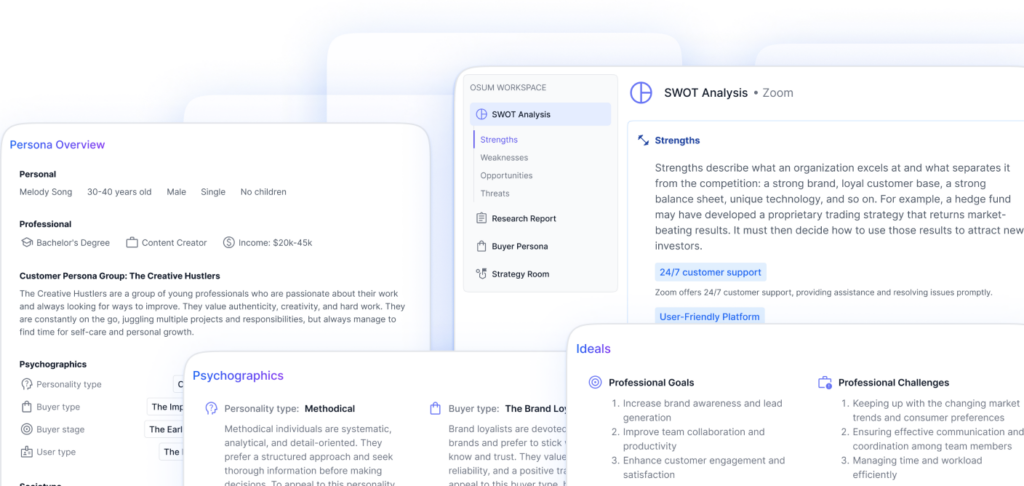

Elements of an Effective Pitch Deck
A well-crafted pitch deck is essential for capturing the attention and interest of potential investors. It serves as a visual representation of your business and its potential for growth. To create an effective pitch deck, it’s important to include key elements that convey your message clearly and convincingly.
Problem Identification and Solution
The problem identification and solution section of your pitch deck is where you articulate the pain point your product or service addresses and how it provides a solution. This section should clearly define the problem in a specific and personal manner, emphasizing the consequences of the problem going unsolved (Toptal Finance).
By focusing on the biggest pain point that your target audience faces, you can demonstrate the need for your solution. Use compelling data, anecdotes, or case studies to illustrate the problem’s impact on individuals or businesses. This helps investors understand the significance of your solution and the potential market size.
Product Features and Competitive Advantage
In this section, you need to highlight the key features of your product or service. Explain how it solves the identified problem and provides value to your target audience. Use visuals, such as product images or interactive demos, to showcase your offering and make it more tangible to investors.
Additionally, emphasize your product’s competitive advantage or unique selling proposition. This could be a feature that sets it apart from existing solutions or a competitive moat that creates a barrier to entry for potential competitors. Clearly communicate how your product stands out in the market and why customers would choose it over alternatives.
By effectively presenting the problem and solution, as well as showcasing the product features and competitive advantage, you can capture the interest of investors and set the stage for the remainder of your pitch deck. Remember to keep the content concise, visually appealing, and aligned with the overall story of your company.
Essential Components of a Pitch Deck
To create a compelling pitch deck that captures the attention of investors, it’s important to include key components that showcase your business’s potential. In this section, we will explore three essential components of a pitch deck: market fit and competitive landscape, revenue model and operating plans, and traction and projections.
Market Fit and Competitive Landscape
Investors want to understand how your product or service fits into the market and how it stands out from competitors. In this section of your pitch deck, provide a clear analysis of the market you are targeting, including its size, growth potential, and any relevant trends or dynamics. This information allows investors to assess the market opportunity and the potential for your business to succeed.
Additionally, it’s important to highlight your competitive landscape. Identify and analyze your direct and indirect competitors, showcasing your unique value proposition and competitive advantage. This helps investors understand how your business differentiates itself from others in the market and why customers would choose your product or service over alternatives.
Revenue Model and Operating Plans
The revenue model and operating plans section of your pitch deck provides insight into how your business generates revenue and sustains operations. Clearly outline your revenue streams, pricing strategies, and any subscription models or recurring revenue sources. This demonstrates your understanding of your business’s financial health and growth potential.
Furthermore, provide an overview of your operating plans, including your cost structure, key expenses, and projected profitability. This allows investors to assess the financial viability of your business and understand how you plan to allocate resources to drive growth and achieve your goals.
Consider including a table or visual representation of your financial projections to provide a clear overview of your revenue and expenses over a specific timeframe. This helps investors evaluate the financial potential and scalability of your business.
Traction and Projections
Demonstrating traction is crucial in a pitch deck. Investors want to see evidence of your business’s progress and potential for growth. Include key metrics, such as user acquisition, revenue growth, customer retention rates, or any other relevant data points that showcase your business’s traction.
Alongside your current performance, provide realistic projections that outline your future growth potential. These projections should be supported by market research, industry trends, and a clear understanding of your target market. Investors want to see that you have a well-thought-out plan for scaling your business and achieving profitability.
Remember to be transparent and realistic with your projections. Overly optimistic or unrealistic projections can raise doubts and undermine your credibility. It’s better to present conservative projections based on thorough research and a realistic assessment of your business’s potential.
By including these essential components in your pitch deck, you can effectively convey the market opportunity, financial viability, and growth potential of your business. Remember to back up your claims and projections with research and data to build credibility and earn the trust of potential investors. For further inspiration and guidance, check out our article on pitch deck examples.
Crafting a Compelling Story
Crafting a compelling story is a crucial aspect of creating an effective pitch deck. It helps to captivate potential investors and make your pitch memorable. Two key components that contribute to a compelling story in a pitch deck are team expertise and qualifications, as well as visual design and storytelling techniques.
Team Expertise and Qualifications
Investors not only evaluate the product or service being pitched but also the team behind it. Highlighting the expertise and qualifications of your team members is essential to instill confidence in potential investors. Provide a brief overview of each team member’s background, relevant experience, and achievements. Emphasize how their skills and expertise uniquely position them to execute the proposed business plan.
By showcasing the qualifications of your team, you demonstrate that you have the necessary talent and knowledge to navigate the challenges and drive the success of the venture. Investors are more likely to invest in a team that possesses a strong track record and a diverse skill set.
Visual Design and Storytelling Techniques
The visual design and storytelling techniques employed in a pitch deck play a pivotal role in conveying your message effectively. As mentioned by Robot Mascot, design is a crucial element that brings the entire pitch deck to life. The human brain processes images 6,000 times faster than text, making visual design an impactful tool for communication. By leveraging visual elements, you can engage potential investors and make your pitch more memorable.
Consider using visual aids such as infographics, charts, and images to support your key points and data. Visualizing information is important as 90% of the information transmitted to the brain is visual, making it easier for investors to engage with and remember ideas presented visually in a pitch deck (Robot Mascot). Effective design in a pitch deck can help entrepreneurs stand out from the competition and ensure that investors connect with the idea being presented, making the pitch memorable and compelling (Robot Mascot).
Additionally, storytelling techniques can be employed to create a narrative that resonates with investors. Craft a clear and compelling story that highlights the problem you are solving, the unique solution your product or service offers, and the market potential. Use storytelling elements such as anecdotes, case studies, and testimonials to make your pitch more engaging and relatable.
By combining team expertise and qualifications with effective visual design and storytelling techniques, you can create a compelling story in your pitch deck. Remember, a well-designed pitch deck not only elevates the content but also reinforces messaging and ensures an enjoyable read for investors, showcasing your understanding of the importance of design in your business (Robot Mascot).
Common Mistakes to Avoid
When creating a pitch deck, it’s important to be aware of common mistakes that can hinder its effectiveness. By avoiding these pitfalls, you can increase your chances of success in capturing the attention and interest of potential investors. Here are three common mistakes to avoid:
Unrealistic Projections and Lack of Research
One of the most significant mistakes entrepreneurs make in their pitch decks is providing unrealistic projections and failing to back them up with thorough research. While it’s essential to showcase the potential growth and profitability of your business, investors prefer well-grounded and reasonable evaluations over outlandish figures without demonstrative evidence (Toptal).
To avoid this mistake, conduct comprehensive market research and gather relevant data to support your projections. Ensure that your financial forecasts are based on realistic assumptions and take into account the current market conditions and industry trends. By providing accurate and well-researched projections, you can instill confidence in potential investors and demonstrate the viability of your business model.
Inadequate Storytelling and Design Flaws
A pitch deck is not just about presenting numbers and figures; it should also tell a compelling story that captivates investors. Failing to tell your story effectively can be a major mistake. Entrepreneurs should frame their pitch by highlighting a specific problem, getting investors to agree on the issue, and then presenting their solution clearly and logically (Toptal).
Additionally, having a pitch deck with design flaws can detract from the overall impact of your presentation. It’s important to ensure that your pitch deck has a professional and visually appealing design. Use clean and minimalistic layouts, incorporate high-quality images and graphics, and maintain consistency in font styles and colors. A well-designed pitch deck not only enhances the visual appeal but also helps convey information in a clear and organized manner.
Failure to Anticipate Questions and Feedback
Another common mistake in pitch decks is failing to anticipate questions and feedback from potential investors. It is crucial for entrepreneurs to be prepared to answer questions about their team, market opportunity, financials, competition, and more to impress potential investors (Toptal). By thoroughly understanding your business and being well-prepared, you can address any concerns or uncertainties that investors may have.
To avoid this mistake, conduct a thorough analysis of your business and anticipate potential areas of inquiry. Develop concise and well-thought-out responses to common questions and concerns. By demonstrating your preparedness and ability to handle tough questions, you can instill confidence in investors and showcase your expertise.
By avoiding these common mistakes, you can create a compelling and persuasive pitch deck that effectively communicates your business idea, captures the attention of investors, and increases your chances of securing the funding you need. Remember to do your research, tell a compelling story, and be prepared to address questions and feedback from potential investors.
Examples of Successful Pitch Decks
To gain a better understanding of what makes a pitch deck successful, let’s explore some real-world examples of pitch decks that have secured funding and captured investors’ attention.
Stytch: Series B Funding
Stytch, a female-founded startup in 2021, successfully raised $90M in Series B funding from investors including Index Ventures, Benchmark, and Coatue. As highlighted on Pitch.com, Stytch positions itself as “the authentication platform for developers.” Their goal is to usher in a passwordless world, enhancing user experience and security across the internet.
Nylas: Series C Funding
Nylas, operating at the Series C stage in 2021, secured $120M in funding. Notable investors include Bossanova Investimentos and Tiger Global Management, among others. Nylas focuses on enhancing software performance by enabling developers to efficiently incorporate email, scheduling, and work automation features into their applications. Their mission is to make software work more efficiently, as detailed on Pitch.com.
Front: Series C Funding
Front, operating in 2020 at the Series C stage, raised $59M in funding from investors such as Eric Yuan and Frederic Kerrest. Front is a customer communication hub that aids companies in providing customized service at scale. Notable clients, including Shopify, Airbnb, and Hulu, rely on Front to enhance their customer communication strategies. Further insights can be found on Pitch.com.
Softr: Series A Funding
Softr, founded in 2022, secured $13.5M in Series A funding from investors like FirstMark, Atlantic Labs, and Scott Belsky. Softr’s mission, as explained on Pitch.com, revolves around empowering individuals without coding skills to create custom apps. Their platform allows the building of websites, marketplaces, and online communities within minutes, eliminating the need for coding expertise.
Morty: Series B Funding
Morty, operating at the Series B stage in 2021, received $25M in funding from investors including March Capital and Bossanova Investimentos. As stated on Pitch.com, Morty aims to revolutionize the home buying process through its online mortgage marketplace. Their goal is to modernize the traditional mortgage industry by providing a streamlined digital experience for homebuyers.
By studying these successful pitch decks, marketing and sales professionals can gain valuable insights into the key components, storytelling techniques, and design elements that contribute to a compelling pitch. Remember, a well-crafted pitch deck can be a powerful tool in attracting investors and securing the necessary funding for your startup or venture. If you’re looking for more pitch deck examples, check out our article on pitch deck examples.