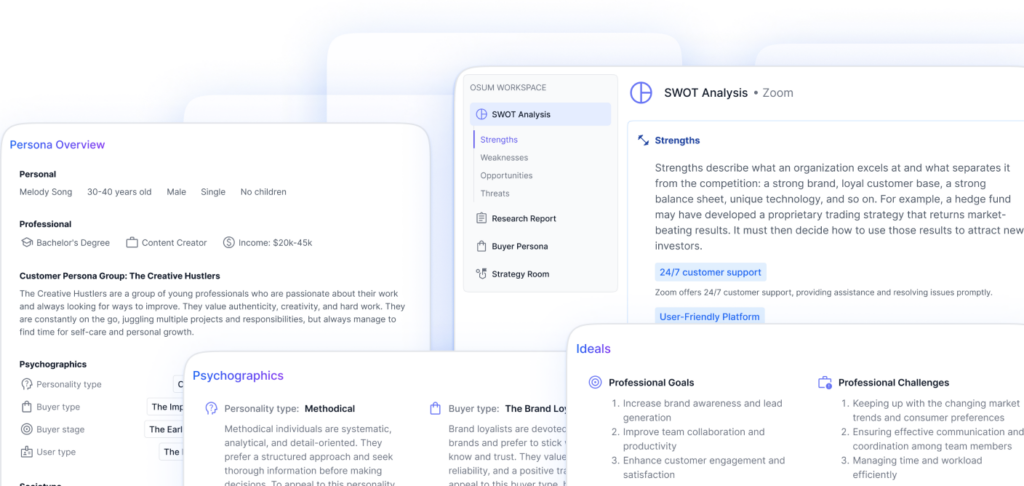

Understanding User Personas
User personas play a crucial role in understanding the target audience for a product or service. By creating detailed representations of the target users, businesses can gain valuable insights into their needs, pain points, and desires. This section will provide a definition of user personas and highlight their importance in driving success.
Definition and Importance
A user persona is a fictional character that represents the target audience of a product or service. It is created based on patterns and overlapping information gathered during user research (source). User personas help businesses empathize with their customers, making it easier to design products and services that meet their specific needs.
The importance of user personas lies in their ability to provide a deep understanding of the target user group. By developing accurate and detailed personas, businesses can make informed decisions throughout the product development process. User personas help guide design decisions, ensure that products are tailored to user needs, and ultimately enhance user satisfaction.
Creating user personas empowers businesses to focus on user-centric design, which leads to products that resonate with their target audience. By putting themselves in the shoes of their users, businesses can develop solutions that address real-world problems and provide meaningful value.
Creation Process Overview
The process of creating user personas involves analyzing and synthesizing data collected during the user research phase. This data can include interviews, surveys, observations, and other forms of user feedback. By identifying commonalities and patterns in the data, businesses can create user personas that accurately represent their target audience (source).
The creation process generally involves the following steps:
-
Data Collection: Gather data through various research methods, including interviews, surveys, and observations.
-
Data Analysis: Analyze the collected data to identify common themes, patterns, and insights about the target audience.
-
Persona Creation: Develop user personas based on the synthesized data. Each persona should be a detailed representation of a specific target user group, including demographic information, goals, motivations, and pain points.
-
Persona Validation: Validate the created personas by comparing them with real user data and feedback. This step ensures that the personas accurately reflect the target audience.
By following this process, businesses can create well-crafted user personas that serve as valuable tools for understanding and connecting with their target users.
Understanding user personas is the foundation for designing products and services that meet user needs effectively. In the following sections, we will explore different types of user personas and delve deeper into the elements that make up a user persona template.
Types of User Personas
User personas play a crucial role in understanding the target audience of a product or service. They help uncover user needs, pain points, and desires, enabling businesses to tailor their offerings to better meet customer expectations. When creating user personas, there are various types to consider. In this section, we will explore two common types: goal-oriented personas and psychographic personas.
Goal-Oriented Personas
Goal-oriented personas focus on the specific goals and objectives of users. These personas provide insights into what motivates users and what they aim to achieve when interacting with a product or service. By understanding their goals, businesses can design and optimize their offerings to help users accomplish these objectives.
To develop goal-oriented personas, market researchers should analyze data collected during the user research phase. By looking for patterns and overlapping information, common goals and motivations can be identified. This information can then be used to create detailed personas that represent the target audience and their specific objectives.
Psychographic Personas
Psychographic personas delve into the psychological characteristics and traits of users. This approach involves studying values, desires, goals, interests, and lifestyle choices to gain a deeper understanding of consumers. Psychographics in marketing focus on understanding the emotions and values of consumers, allowing businesses to create more accurate marketing strategies.
To develop psychographic personas, market researchers employ qualitative methodologies to gather data on consumer behaviors, preferences, and attitudes. This data is then analyzed to identify commonalities and segment users based on their psychographic traits. By understanding the psychological makeup of users, businesses can tailor their messaging and offerings to resonate with their target audience on a deeper level.
By utilizing both goal-oriented and psychographic personas, businesses can gain comprehensive insights into their target audience. These personas provide a holistic view of user motivations, goals, desires, and values, enabling organizations to make informed decisions regarding product development, marketing strategies, and customer engagement.
In the next section, we will explore the process of crafting a user persona template, which serves as a framework for organizing and presenting the information gathered during the persona creation process.
Crafting a User Persona Template
To effectively understand your target audience and guide design decisions, it is essential to craft a comprehensive user persona template. This template should include key information about the user, such as demographic details, goals and motivations, as well as frustrations and pain points. Let’s explore each of these components in detail.
Demographic Information
A user persona template should start with basic demographic information that provides a snapshot of the user’s characteristics. This includes details such as age, gender, location, education level, occupation, and any other relevant demographic data. By understanding the demographics of your target audience, you can better tailor your products and services to meet their specific needs and preferences.
| Demographic | Information |
|---|---|
| Age | 25-34 |
| Gender | Female |
| Location | Urban area |
| Education Level | Bachelor’s degree |
| Occupation | Marketing professional |
Goals and Motivations
Understanding the goals and motivations of your target audience is crucial for designing products and services that resonate with them. A user persona template should include insights into what drives the user, their aspirations, and what they hope to achieve. By aligning your offerings with their goals, you can create a more meaningful and engaging user experience.
| Goals | Motivations |
|---|---|
| Improve brand awareness | Advance career prospects |
| Increase social media engagement | Stay up-to-date with industry trends |
| Enhance customer satisfaction | Expand professional network |
Frustrations and Pain Points
Identifying the frustrations and pain points of your target audience allows you to address their challenges and provide effective solutions. A user persona template should capture the obstacles and difficulties that the user encounters, helping you to design products and services that alleviate their pain points and enhance their experience.
| Frustrations | Pain Points |
|---|---|
| Limited resources and budget for marketing campaigns | Difficulty keeping up with the fast-paced nature of digital marketing |
| Inefficient communication and collaboration with team members | Lack of time for professional development and skill enhancement |
| Inconsistent brand messaging across different channels | Difficulty measuring the impact and ROI of marketing efforts |
By incorporating these elements into your user persona template, you can gain valuable insights into your target audience and their needs. This information will serve as a foundation for making informed design decisions and tailoring your products and services to effectively meet the requirements of your users.
To further enhance your user persona template, consider adding imagery that represents the user and their characteristics, as well as incorporating personality traits that capture their unique attributes. These additional elements help to bring the user persona to life and make it more relatable and engaging for your design team.
By utilizing user personas effectively, you can ensure that your design decisions are aligned with the needs and preferences of your target audience, ultimately driving the success of your products and services.
Enhancing User Personas
To create more impactful and relatable user personas, it is important to enhance them with additional elements. Two effective ways to enhance user personas are by adding imagery and including personality traits.
Adding Imagery
Including images in a user persona template can help humanize the persona and provide designers with a visual representation of the user. Images give designers a better idea of how their design and products can impact the person’s life (InVisionApp). The images should capture the user’s age, gender, and personality, providing a more complete picture of who the persona represents.
By incorporating images, designers can develop a deeper understanding of their target audience, enabling them to create more user-centered designs. Visual cues can help designers empathize with the persona, allowing them to consider the persona’s needs and preferences more effectively. This, in turn, leads to the creation of more tailored and relevant products or services.
Including Personality Traits
In addition to demographic information and goals, including personality traits in a user persona template can provide valuable insights into the persona’s behavior and preferences. Understanding the personality of the target user helps designers develop a more accurate understanding of their motivations and decision-making processes.
By incorporating personality traits, designers can better anticipate how the user may interact with their design. This understanding allows designers to create experiences that resonate with the persona on a deeper level, enhancing user satisfaction and engagement.
Including personality traits in a user persona template can be achieved by describing characteristics such as introversion or extroversion, adventurousness, or attention to detail. These traits provide valuable context for designers to consider when making design decisions.
When enhancing user personas, it’s important to strike a balance between providing relevant details and maintaining the persona’s focus. Including imagery and personality traits should complement the existing information and contribute to a comprehensive understanding of the user. By leveraging these enhancements, designers can create more impactful and user-centered designs.
For ready-to-use templates to help you create user personas, check out our collection of free persona templates. These templates can serve as a starting point for incorporating imagery and personality traits into your user personas, enabling you to develop a deeper understanding of your target audience.
Utilizing User Personas
Once user personas have been created, they become valuable tools that inform and guide various aspects of product development and design. In this section, we will explore two key ways in which user personas can be utilized: design decision guidance and tailoring products to user needs.
Design Decision Guidance
User personas serve as a compass that guides design decision-making. By understanding the characteristics, needs, and preferences of the target audience, designers can make informed choices that align with the identified personas. Design decisions can include aspects such as user interface, visual design, and interaction patterns.
Having user personas at hand helps designers prioritize features and functionalities that cater directly to user needs, ensuring that the product resonates with its intended audience. For example, if a user persona highlights the importance of simplicity and ease of use, designers can focus on creating an intuitive interface and streamlining the user experience accordingly.
By considering the diverse perspectives and preferences encapsulated within the user personas, design teams can create products that are more user-centric, increasing the chances of creating a positive user experience.
Tailoring Products to User Needs
User personas play a crucial role in tailoring products to meet the needs of the target audience. By understanding the goals, motivations, frustrations, and pain points of the personas, product owners can ensure that their products address these specific needs effectively.
Tailoring products to user needs involves aligning the features, functionalities, and user experience with the identified personas. For instance, if a user persona indicates a preference for seamless integration with external tools, product owners can prioritize integrating relevant APIs or creating partnerships that enhance the overall product experience.
By leveraging the insights gained from user personas, product owners can make informed decisions about what features to include, how to prioritize them, and how to differentiate their product from competitors. This approach reduces the risk of creating products that miss the mark and increases the likelihood of delivering a solution that resonates with the target audience.
Remember, user personas are not static documents. As development progresses and new insights are gained, personas should be revisited and updated to reflect the evolving needs and preferences of the user base.
By utilizing user personas, product development teams can ensure that their efforts are aligned with the identified target audience. User personas provide a shared language and reference point for cross-functional teams, enabling seamless collaboration and focused efforts on addressing user needs and preferences. They serve as valuable tools for guiding design decisions and tailoring products to meet the specific needs of the intended users.
To create your own user persona templates, you can explore resources such as buyer persona templates, marketing persona templates, or customer persona templates. These templates can be customized to suit your specific requirements and help you gain deeper insights into your target audience, driving the success of your product development efforts.